Australian Sound Artist
tattered-kaylor.com
Showing posts with label Residencies. Show all posts

Sunday, August 17, 2014

Liminaria; Interferenze 2014

This post is long overdue but you know the saying - 'Better late than never'.

Blog posts of Liminaria (Interferenze 2014) can be found HERE

A small example of some field recordings as gathered by myself and other participating artists for Liminaria can be found HERE

If I find the time - I will try to blog some more about the experiences - it can be hard to put such things into words......

enjoy!

Sunday, July 20, 2014

Day Five at Pollinaria

:: Claudio Pentronio at one of his families barley fields near Castel del Monte ::
Friday 20th June

Today was spent visiting two local farmers and cultivators of grain and wheat. The first was custodian and farmer, Alfonso D'Alfonso. His harvests are found in the Capestrano, Abruzzo  region and include one of the most ancient grains - spelt (Farro in Italian) as well as Barley, Solina and Senatore Cappelli (a wheat). With each visit to the local farmers, I have been fortunate enough to be able ask them a few questions about themselves and their families histories in working with the land. Daniela is an excellent translator (amongst many, other things....) and has helped me gather these personal stories as we go.... The below is a rough transcript of selected questions I asked Alphonso whilst at his property, sitting by a clear stream drinking wine and eating the produce from his land including bread and fresh raspberries.

:: Alphonso with a farmhand ::
TE: Can I ask of your families history in relation to working the land in this part of Italy?

Alphonso: My family arrived in Capestrano from Naples around 1700. We have always been farmers and cultivated the land for produce but it was my father who first planted wheat. My past Grandfathers were known within the community by a nickname. The name was 'Manina' (this means, 'Little Hand'). My Grandfather worked very hard and had very big hands - so much so that friends would call him Manina, as a joke....

TE: Which are the oldest grains that you grow?

Alphonso: We grow a very ancient strain of Spelt and also Saragolla (the Americans call this Camoot). You must understand though that each grain will grow differently, depending on the nutrients of the soil it is planted in and the elements that it grows by. The Spelt that is planted in America will be very different to the same grain, planted and grown here in Italy.. But it all relates back to that ancient strain.

TE: I have heard many stories about the good memories associated with the time of harvest and they are wonderful to hear but I assume there must be the darker memories also? Can I ask what some of the darker aspects of the time of harvest are?

Alphonso: The hardest aspect for me to see at the time of both past and present harvests, is the difference in the workers. You easily differentiate those who have land and the grain and those who do not. Each year at harvest, there are a number of workers who arrive, who travel for the work and support their families by moving around - going where the harvest is in order to labour for a casual employment. It can be hard for them, their children and their partners. They can have very little and sometimes it is made obvious by small things you see, like the condition of the clothes they and their children are wearing. 

:: The last field of the day ::

The last fields we visited for the day were those of the local shepherd. We were met by his son, Claudio Petronio and taken to a couple of 'spots' the last being the image above. This photo was taken with me standing - the stalks were at that height that you see them. Out of all the places I have visited during this residency, this one, will be the one that I revisit most in my memory... The fields were positioned at the base of these huge mountains that surrounded them on three of their four sides. We reached the location at the end of the day - right as the sun was dropping - so the light was changing rapidly - its spectrum shifting from yellows to reds to blues within the timeframe of an hour. The local wildlife was settling in for its evening. Birds and insects alike were preparing for the night. A solitary duo called to each other across the valley in a gentle rhythm, with the pulse of crickets as their backdrop. There was a small wooden shack there - built by hand - out of rough wood, just for shelter. I fought the urge to go inside, drop my bags and remain there indefinitely.

Sheltered by the mountains - you felt calm and satisfied - the world beyond was no longer.........

Sunday, July 13, 2014

Day Four at Pollinaria

Thursday 19th June.

Todays tasks to conquer included visiting the small, locally run flour mill - where I will have the opportunity to record the machines and chat (via Daniella's translation) to the owners/operators and - to meet the shepherd who watches over the sheep that roam over the land of Pollinaria. These two elements are some of the most key connections I have (self) discovered during this short stay and I am very lucky that A) The flour mill is active during this week as it not the typical milling time and B) that Gaetano has been able to contact the shepherd and arrange a simpatico of time and place. 


As the focus of this collaboration between Interferenze and Pollinaria is on the two areas of cultivation - Wheat and Honey - I was a little unsure as to why I was so bent on collecting the sounds and speaking with the shepherd… Perhaps I shouldn't be chasing this element? I keep asking myself 'why is it relevant' and 'why do I feel it's so important?' This would be the moment my peripheral vision opens up and the view converts from mono to stereo. After much pondering I reached the conclusion that the shepherd is a quintessential example of the work-traditions of the people of Abruzzo's parents, grand parents great-grand parents etc, being carried on over to the 'NOW'. These practices' profits are not the highest - their purpose is based on the act of participating in life and contributing to the community - not on exploiting all opportunities to make the most amount of cash possible. The rewards from this work are not always monies - sometimes it's trade or barter - for 'favours' like borrowing equipment or lending a helping hand. These trades are more often than not - not an official agreement - just a friendly conversation and subsequent agreement between  neighbours.


The role of the shepherd (as per the wheat farmers and bee keepers in Abruzzo) is - in my opinion - in the middle of transition - from a working role within a community - purely a position to be filled (so-to-speak), to an act not unlike a ritual…… Perhaps not as formal - definitely not as formal but just as revered and with similar complex worth that supersedes a  superficial currency evaluation.. Hmmm .. More thoughts to come on this I'm sure....

The visit to the flour mill was quite an eye opener… Partly owned by the World Wildlife Fund, it is found within the Natural Reserve of Lago di Penne. Sounds terrible doesn't it - a flour mill in a national park… Well it was absolutely beautiful. The 'factory' part of the mill was housed in a small cylindrical building which contained the noise of the machines remarkably well. I experienced no general 'sky drone' you usually associate with factories and the modest size of it meant it was not overbearing in its surroundings. Once again - the purpose of the mill goes well beyond the act of mass production for high profit. All of the produce they handle is organic and comes from the local farmers and cultivators. To begin to understand the people of these regions you really need to look at the efforts they make to sustain a healthy and balanced lifestyle both physically and mentally - with themselves, each other and their surrounding environments.

To read more on the WWF's involvement please have a look HERE 

:: The flour mill - exterior::


:: The flour mill - interior ::

I spent about an hour recording the machines. Using contact and general room microphones I captured their various drones and mechanisms… I only wish I had more time…. I was able to exercise one favourite method of mine that rarely gets used. The process involves using microphones to capture the sounds of the machine and its various tones as heard in the room - but all in one take. The simplest way to explain it is to say that you are moving the microphone across/around/within the machines as they function - changing the resonances, tones and frequencies that are captured, live - as you are recording. Shifting the microphones as you hear the tones shift - waving them around and moving them over the body of a motor - composing live in a sense… It's a liberating way to record… Very meditative and instinctual. It encourages you to listen intently to the sounds as they shift through the changing positions of the microphone - and then react automatically, moving the mic to sculpt the recording as per a composition… It's by no means - a method used by 'the professionals' but it's one that demands you to be in tune with exactly - what you are capturing sonically...  An excellent way to hone your skills and explore a microphones capabilities...

Thursday, June 19, 2014

Day two at Pollinaria

:: Ground floor @ Pollinaria ::


Tuesday 17th June.

With such short time the recording has well and truly begun. The wet weather is a typical hindrance - it seems every country I have visited in the last two years - my recordings have included rain - no matter what time of the year it is. Water is a wonderful sound to record but it would be nice to have the choice - and that is a little harder than usual to master this time round. 

Last night I 'warmed-up' by recording some of the creaking doors of the farmhouse. Ground floor of the building is a fantastic space whose inner architecture is not dissimilar to a miniature representation of le abbey Noirlac and the acoustics leave you with the same sensation of 'other-worldliness'. Natural acoustics and creaks are like treats to me so it was nice to find them here and begin the sound collection with them. This time round I indulged my typical desire to go against the textbook recommendation of recording technique - close mic'ing the door extremely so, with a hyper-cardioid. I am pretty chuffed with the result - a hyper-surreal sensation of listening through a microscope to the point that the original sound - as authentic as it is, is completely unrecognisable and bizarre. Your instinct to identify the sound swings from assurity (Oh yes - that's a door) to sheer doubt and questioning as the sound's envelope progresses (what the hell is that?)

This morning was the dawn chorus with Daniella. We started a little later than usual as the sky was so overcast that even the birds were slow to get started. The nearby valley is an excellent haven for birds and shelter from the noise of nearby roads and I think the best recording will be the very first.

:: Bean recording - contact mics ::
The afternoon was spent in the closest shed where giant bags of black beans used for fertilising the soil, and wheat seed for planting are to be found. Cue, the contact mic's and we had some very textural rolling rumbles created as I moved my hands through the beans. Taking the microphones in hand, I'd plunge them deep into the bags and then pull-back - yoiking them out just as quickly. The timbrel shift linked to the speed of the hands was not unlike a doppler effect and made me think of breathing…

:: Recording Daniela making pasta ::
Night time was spent drinking vino rosso with Gaetano and further discussing the project. After a few glasses, Daniella decides we MUST record the sounds of making pasta, to then be eaten for dinner. Out with the contact mic's again and she goes to work. It is a beautiful thing to see. 'Oh no! I am not a stereotype!', she promises me as she cooks away - her hands moving deftly in movements she seems well practised in. "Not all Italians cook pasta", she promises. I understand, but as a visiting auzzie, I would like to let myself continue imagining that perhaps in some parts of Italy, they do….  

Wednesday, June 18, 2014

Welcome to Pollinaria

:: Window view, first morning ::
Monday 16th June. Day one @ Pollinaria:

From Birmingham I've headed to Italy, the Abruzzo region, to begin a joint residency at Pollinaria, that will complete at the annual Interferenze festival, Fortore region. The work that I will do over the next two weeks is part of a collaboration between Pollinaria (Gaetano Carboni) and Interferenze (Leandro Pisano), whose focus is on sound as the medium and rural regeneration as the context. I have the privilege of being the first artist invited for the initiation of this joint project and I am truly honoured to do so. My understanding is that this collaboration between the two entities will continue well into the future and aid the cultural, economic and community regeneration of these specific regions in rural Italy.

The first day has been a bit of a blur. I arrived late last night in the dark and had no visual on where I might find myself…. I have come prepared for the beginning of a hot Italian summer but woke - to the sounds of rain and wind. I look out my window to see where I am and find myself surrounded by rolling hills and unbelievably picturesque Italian countryside framed by sheer dark mountains rising in the background. No this is not a dream, this is Pollinaria, a property that supports the working ideal of the 'young' landowners and cultivators such as Gaetano Carboni, to be found in growing numbers,in rural Italy.

During my stay I will be collecting recordings specific to this pocket of the world. As regions whose economy is primarily agricultural they both produce a variety of nourishments for the body. Delights such as olive oil, grapes and fresh fruit and veg all come from these inland mountainous areas. The project I will undertake will focus on two points of simpatico between Fortore and Abruzzo - these are Wheat and Honey.

My morning was spent talking at length with locally born photographer, Daniella D'Arielli. She will be my 'touchstone' (so-to-speak) to the area, helping me understand its community, lifestyle and the ethos behind Pollinaria. She will also make sure I do not get myself into trouble on early morning recording expeditions, keeping me well clear of wild boars and giant wasp looking things that scare the absolute crap out of me!

:: Found in my camera bag during first night of recording ::
Late afternoon comes and we are joined by Gaetano. We discuss the ideas that have been sparked during the morning with Daniella. While I arrived with a clear starting point for my work, after speaking with Daniella I begin to comprehend the broader ideals behind this growing movement of rural regeneration - particularly in relation to working relations with the land and the beasts and bugs to be found there. There is an intrinsic connection between human and nature, to be observed in the work of those who choose to live by the land, in these areas. The key word to this ideal is 'Choose', as in this century, with growing mass consumption and produce, these young 'farmers', have chosen - not only to continue working the land as per their relations before them, but - as importantly - to counteract the notion of mass produce - and return to farming the unique grains and region-specific produce, as per their grandparents…

It is a romantic and powerful ideal. This seems to be the essence of the purpose to the work I will undertake….

TBC

This work is made possible by the generous support of the Ian Potter Cultural Trust

Thursday, June 12, 2014

Field recording Vs Compositional agenda

:: Jonty Harrison, the dome room @ Birmingham ::
I consciously decided not to bring any completed material to the University of Birmingham - the idea being - to have a 'clean slate', on which to work. Having made that decision, the night before departure my cowardice got the best of me and I dragged and dropped onto my harddrive, the piece I have been working on of late - that uses the collection of recordings I gathered whilst in North Northumberland. On meeting with Dr Scott Wilson and Professor Harrison, they both asked me, 'what I had to play to them'. 

I didn't see that one coming... 
Why on earth did I not see this coming...?

So over half a day I took my 40 minute - stereo composition, broke it apart, sliced sections of it - removing chunks and re-assembling the remains - spilling it over 8 speakers + 2 subs to be presented the following morning. Little did I know, what discussions this selection of work would stimulate nor the internal debate and realisations/retaliations it would spark in my own head.

To provide context to the piece - it was created with the intent of maintaining (as much as I felt possible) the original slabs of long recordings and to honour the technical and spiritual practice of the field recordist. During my time with Chris Watson and the independent residency that followed, I found myself focussing on long engaged recordings. I say engaged to mean - the ones during which you stand there, imitating stone or trying to dissipate into air so as not to be participatory, whilst guiding a boompole and/or actively monitoring your levels. Typical recording times from this expedition were between 10 to 30 minutes. The longest was over an hour. 

In light of the understanding of the extreme sonic processing and compositional techniques exercised by those who create(control) in the electroacoustic domain - you could say that presenting such an uncontrolled (in comparison) piece was inadvertently provocative....  (another great gift of mine - yes I am being sarcastic...) While I wouldn't do the same again, the exercise rang with a resonance that was as frustrating as it was - enlightening. It was a perfect metaphor for the point I find myself at in my work development. The questions Professor Harrison asked me of my own work consisted of ones I often ask myself - the many unresolved inner conflicts I have about the ideals behind each piece - the aspects that can be considered contradictory or hypocritical - the constant debate that rages in my head - between concerns of  nature and the awe of technology.... The wish to capture and present more 'pure' field recordings and the desire to carve sound into my own making with the tools of composition and absolute control....

Does my work pertain the concerns of acoustic ecology and perhaps an awe at the natural world as is?
Is there a gentle obsession with control, the manipulation of sound and the technology that facilitates?

I believe so..

And these two polar ideals that I am trying to resolve in sonic composition, have come to loggerheads...

This intensive is made possible by the generous support of the Ian Potter Cultural Trust.

Sunday, June 8, 2014

The Diskery....

:: The Diskery, Birmingham 2014 ::


This morning I successfully managed to detach myself from all luminous screens and venture into Birmingham city centre. On my journey home I somehow eventuated at another sonic Aladdin's Cave. Initially I couldn't believe my luck. After a stunted moment of realisation I pretty much ran through the door - just incase it disappeared before I could get there. The sight was one for sore eyes. On leaving my home town (Adelaide), there were two record stores that I use to frequent - one had a die-hard cult following with the 'younger' music lovers - selling old and new vinyl - with a renowned electronic section that rivalled no other I have come across ever since. The other, was not unlike The Diskery - perhaps less popular musics such as the 'Big Hit' material from any decade. On a quick return to Adelaide about three years later - both stores had folded - I would say the surge in digital would have played a part.

:: Jimmy chats to a regular (which is almost everyone who walks through the door) ::

The photos I took of The Diskery don't really do the place justice. The sheer amount of the collection has reached the point of climbing the walls and spilling across the ceilings. Fortunately, I arrived just before a big rush - when I had to compete with a number of hatted, caned and elderly gentlemen, for the attentions of the two in house experts - Jimmy and Liam. Lovely, lovely people - Liam has been working at The Diskery for 42 years, whilst Jimmy, is going on 47. Entering the store is like entering their home and their love of music (all types) and phenomenal knowledge becomes apparent with each enquiry - no matter how trivial.


My find for the day was the record, 'FIREWORKS! JVC presents the Spectacular Sound of CD-4'. As a rule, I don't let myself buy records when I am travelling - particularly heavy and prone to bending they don't make for good travel companions but in this instance, I thought an exception could be made. As I have come to Birmingham as a student, who works with field recordings in multichannel, it only seems fitting that on seeing a CD-4 record containing sounds of fireworks  - it should be mine. CD-4 is one of the many attempts at commercial release of multichannel recordings on hardcopy media. To be honest - I don't know much about it but a quick wikki tells me it was introduced as early as 1972 (!) I can't wait to get home and try it out - A/B it with my own quad work - should be vEry entertaining! I'd like to also better comprehend its technology - it's fascinating to learn about the many multichannel formats we have tried and old technology in hardcopy appears quite appealing to me at the moment.......

If you would like to hear more about Liam and Jimmy at The Diskery - you can view a clip on youtube HERE - or drop by and say hello at 99 Bromsgrove St.

Friday, June 6, 2014

University of Birmingham: Visiting Student

:: 'Old Joe', University of Birmingham, 2014 ::
Walking up the stairs to the foyer entrance of the Bramall music building at the University of Birmingham, I couldn't help but think, 'Not in Kansas anymore....'. For two weeks I will be a visiting student at their Music Department with direct focus on the electroacoustic section, under the supervision of Dr Scott Wilson (Supercollider extraordinare). As the home to the renowned BEAST system, multichannel works (live and static) are well catered for - with a number of sound studios available for post-grads, in a variety of multichannel configurations. My timing is at a point of change in the department, as Professor Jonty Harrison is on the cusp of retirement from his position as director of BEAST - none-the-less, a small cross section of the international electroacoustic and acousmatic community can be found tucked away in these  culdesacs of sound and measured thought. 

The downfall of coming all the way from Australia for such a visit, is the unrealistic expectation that on entering this inspiring and accomplished institution, all my previous compositional 'road-blocks', will be solved. Of course - it takes only a matter of hours to consciously acknowledge 1 - the previously unvoiced expectation and 2 - the fact that these technical and creative hurdles are still as present as I am..... Unfortunately, I can't leave them - along with my unwatered plants, behind in Australia. Unfortunately, I cannot kill them with neglect...... 

The upfalls of this journey start with the stripping away of your comfort zone of excuses that you have oh-so-craftily propped up around you to mask these greater areas needing your address - leaving your (lack-of) accomplishments raw and exposed, under the scrutiny of your own scathing eye.... In more congenial wording - 'It is very clear, the areas that I wish to improve in my work'. Having had a two year hiatus from live performance and a strong focus on compositions whereby the field recording is the primary intent - I now need to switch my gaze back to more 'gestural' composition - that constructs its own agenda via creative control and execution.

Enough of my ranting - having spent the last three-and-a-bit days in the studio - only to CREATE more problems than I intended to fix, I am truly beginning to understand the value of knowing that you know nothing... Now that I (think) I know what I do not know, I will begin again, from (almost) scratch, and see where these works develop. At this stage my focus is on purely software/midi capability. Sound diffusion on multichannel/custom systems - the most effective/flexible (to my ear) way to do so and Sonic processing - particularly in live performance via midi control. Any plans for collecting field recordings in Birmingham will have to wait until Italy and the Interferenze festival, along with the indulgence of creative composition.....

More details to come ~

This intensive is made possible by the generous support of the Ian Potter Cultural Trust.

Sunday, March 16, 2014

Ian Potter Cultural Trust 2014


Plans for 2014 are well on their way. I have been fortunate enough to be a recipient of the Ian Potter Cultural Trust's grant, which will enable me to achieve three projects for the year. 

The first will be as visiting scholar to the University of Birmingham, where I will focus on their BEAST and electroacoustic studies departments. I am looking forward to meeting Professor Jonty Harrison (on the cusp of his retirement from his position at the University) and aim to spend this (unfortunately) brief time further researching work methods in acousmatic and electroacoustic composition.

The following two sections will involve joint residencies and attendance at two events in rural Italy. The first will be within Pollinaria in Civitella Casanova, Abruzzo, to be followed by the Interferenze new arts festival - curated, directed and founded by Leandro Pisano. It is expected that these two projects will entail a considerable amount of research, skill sharing (amongst participating artists) and engagement with local communities and environment. A natural osmosis between the two will be encouraged. I will provide more detail as plans progress but already - am becoming aware of the intrinsic bond between community and land. As a township built on inland mountains, agriculture is the base of their economy - with organic methods that support local 'genetic patrimony', being majority. I am inspired by the thought that these methods of working with the land, as established in the past, are still very much alive, respected and valued as part of daily life for both present and future generations.

Many thanks to the Ian Potter Foundation for providing such an opportunity for emerging artists. Support such as this makes possible the achievements that propel us into the (inter)national community and our mid career.....

Saturday, March 1, 2014

North East England: Sonic Postcard NEE04

:: NEE04 - Blowhole, Howick area 12th November 2013. Water - and fragile booming ::


Recording Technical Specifications:
Recording device: Sound Devices 788T
Microphones: DPA 4060 (stereo pair)

Tuesday, February 25, 2014

North East England: Sonic Postcard NEE03

:: NEE03 - Caris Clocks, Alnwick Town 15th Nov, 2013. General clock-ticking ambience and gentle chimes ::


Recording Technical Specifications:
Recording device: Sound Devices 788T
Microphones: DPA 4060 (stereo pair) and DPA4017
Multichannel recording and mixdown

Recording taken within Caris Clocks, Alnwick. Time keeper is 4th generation clock repairer, Gordon Caris. His son is 5th generation. Lovely sounds of ticking, a few gentle chimes. Clocks are irregular with their times (they are in for repairs...) so chiming is a bit erratic.

Many-thanks to Gordon for accommodating that which was so unfamiliar......

Sunday, November 24, 2013

North East England: Sonic Postcard NEE02

:: NEE02 - Barter Books, the old Alnwick train station 4th November 2013. General shop ambience and Moozak with the train set running above and over the book shelves ::


Recording Technical Specifications:
Recording device: Sound Devices 788T
Microphone: DPA 4060 (stereo pair)

Saturday, November 16, 2013

Parting is such sweet sorrow....

:: Lindisfarne ::

It's always hard to leave a place that you have been getting to know via a two or three week intensive listening and recording experience. I leave Alnwick tomorrow morning and already I'm taunted by all the sounds that slipped through my net. Not - to - fear, I did manage to collect a few gems, one of the last being a recording from the local clock repairer's store. Some of these sounds will become Sonic Postcards in the days to follow and I look forward to sharing them on this blog and on Freesound. From here I travel to London for a couple of days and then to Belgium by train. I'm very excited at the thought of the train journey. I have never been to Belgium before, nor caught a train to another country (Australia is a continent remember!) so will be a little like a kid in a candy store once the experience begins. I'll keep my recording gear handy just incase.... In Brussels I will be attending the L 'Espace du son, the 20th international acousmatic festival and I must say, I (again) am pretty positively wired about the planned experience. Hopefully by attending the festival I will become enlightened to more techniques and skills in sonic diffusion using methods of the acousmonium - which - I hope to use with the sounds I have gathered under the guidance of Chris Watson and in my solo work during this trip.

:: Chris Watson and Dunstanburgh Castle ::
The focussed work I undertook with Chris was a privilege that not only taught me about recording technique and method, but  also inadvertently about himself. His generosity extended beyond knowledge, to an honest point of care and love in the work that he does - recording the sounds of our world. His humble stance on what he has done and is still doing, provided me with an affirmation in my own work and a comfort in the knowledge that my own passion for sound alone - is an invaluable reason to continue (against the odds of finance, travel, time, health etc. etc. etc.) Many thanks (again) to Chris for the sharing of his expertise. The passing on of this knowledge, from accomplished artist to emerging is indeed a noble gesture that can be hard to find.


This project has been assisted by the Australian Government through the Australia Council for the Arts, its arts funding and advisory body. 

North East England: Sonic Postcard NEE01


:: NEE01 - Boulmer Stones 11th November 2013. Tide is rising. I am standing on volcanic stones while the waves come in and wash around me ::


*Please note: On streaming the sound there is noticeable dithering and high frequency artefacts. On downloading the sound itself, these artefacts should not be present.

Recording Technical Specifications:
Recording device: Sound Devices 788T
Microphone: DPA 4060 (stereo pair)

Tuesday, November 12, 2013

Winter Sounds of North East England

:: Recording site. North East Coastline, England ::


Recording England's wildlife in Winter is quite a challenge - particularly if wildlife is not your speciality. Unlike Australia (that seems to house a constant crowd of critters all year round), come Winter time in England a number of birds disappear. Along with the Winter closure of buildings whose acoustics I'd hoped to capture, these have been the two biggest hurdles that have arisen throughout this trip. On a positive note, what these unexpected 'exclusions' have given me is a shift of gaze from the obvious splendour of local historic castles and as-yet unheard (to me) birdcall - to the turning cogs in the local community that keep it ticking along year-in and year-out. I mentioned in an earlier post - the blessing-in-disguise of missing the tourism trade times and I think I am still only just beginning to appreciate the impact this will have on my work (with only four days to go....). 

Before I leave I hope to capture the sounds of the local trade. Its butchers it's bakers, its clock makers - those who have lived and worked in this part of the world their whole lives. After chatting to a number of local tradespeople I have found that they are often 3rd or 4th generation in a family business local to the area. It's quite touching to come to this gentle realisation - with each (sometimes a bit awkward) conversation that I have. These families are a part of the past, present and future of these towns. Their names may be found on a street name as they have become inexplicably interwoven into the history of their place of living. Quite a realisation to someone who has lived in four states in the past seven years (ish?) and countless houses... 

In contrast to the sound of industry I am also gathering the sounds of the beautifully wild and wooly nature that sustains the local communities. Crashing waves, churning waters and howling winds are all a part of the soundscape. Today I went recording near Craster, at the old Bathing House on the coastline. I had looked at images of the area but didn't have much of an idea about what to expect - except that the abundant nesting community of birds would not be present (Winter!). What I discovered was beautifully sculpted volcanic stones that have been carved over thousands of years - by the waves of the ocean. Their shapes looked mechanical, artificial and completely organic - all at once. Trying not to slip I managed to clamber on top of a raised ledge and hang my microphones down into carved pools and blow holes as the tide rose. I saw only one person today - an old man who smiled at me but would not speak as we passed each other. It was a beautiful day - with sounds so perfect that even this stranger would not unsettle it with his voice... 

Thursday, November 7, 2013

Day 5. Rock pools and hail of Embleton Bay

:: Embleton Bay ::
Sat 1st Nov. The last day of work with Chris was spent heading along Embleton Bay with the idea being to arrive at Dunstanburgh Castle. Unfortunately we only made it to the foot of the cliff walls - as the castle's grounds begin. The wind, rain and hail had become constant enough as to push us to retreat. I actually revelled in the subtle attack of the elements and if the dark hadn't been approaching (so quickly in the UK!) then I would have happily continued with the hike. I gathered some astonishing sounds of the waves crashing on the shore using Chris's DPA 8011's and attempted to gather the more dynamic sounds from the rock pools but with less success. It seems that the Sound Devices 788T model has a fatal flaw in the the limiters are not available when recording at 96k. This ultimately meant I could not record sounds from the rock pools as their quiets are too quiet and their louds are pure distortion without a limiter. It's worth mentioning that this is the first - ever - downfall that I have found from this model.

:: Recording @ Embleton Bay ::
To record the general sounds I used my old trusty Rode NT4 (stereo). Again, I was disappointed in that there was bad distortion on one channel. What I assumed was wind noise (as you can see - I did not have with me adequate wind jamming gear....) was actually a noise flaw that disappeared once I powered the microphone from the SD's phantom power AND switched the 'ON' switch to 'OFF'. I've never had this problem before and I can say that I won't be making it again but what a frustrating way to learn these beginner errors....... Safe to say - I will be heading back to the Bay and will aim for windy and wild weather when I do so. Night is falling faster and faster so I will be trying to cram my recording sessions in when the light is still present. I'm already dreading the day of 'leaving'. There's so much to record.

The last couple of weeks I will be working on my own and capturing what I can of sounds from the area. It's a strange time to be in Alnwick, the first week of the castle and some surrounding tourist attractions closing down for Winter. In a sense - you could think that I've 'missed it', that I am too late, or, you could think that my timing is perfect, to capture the personal sound signature's specific to this area, devoid of the tourist crowds.

This project has been assisted by the Australian Government through the Australia Council for the Arts, its arts funding and advisory body. 

Tuesday, November 5, 2013

Day 4. Good work habits for the field recordist

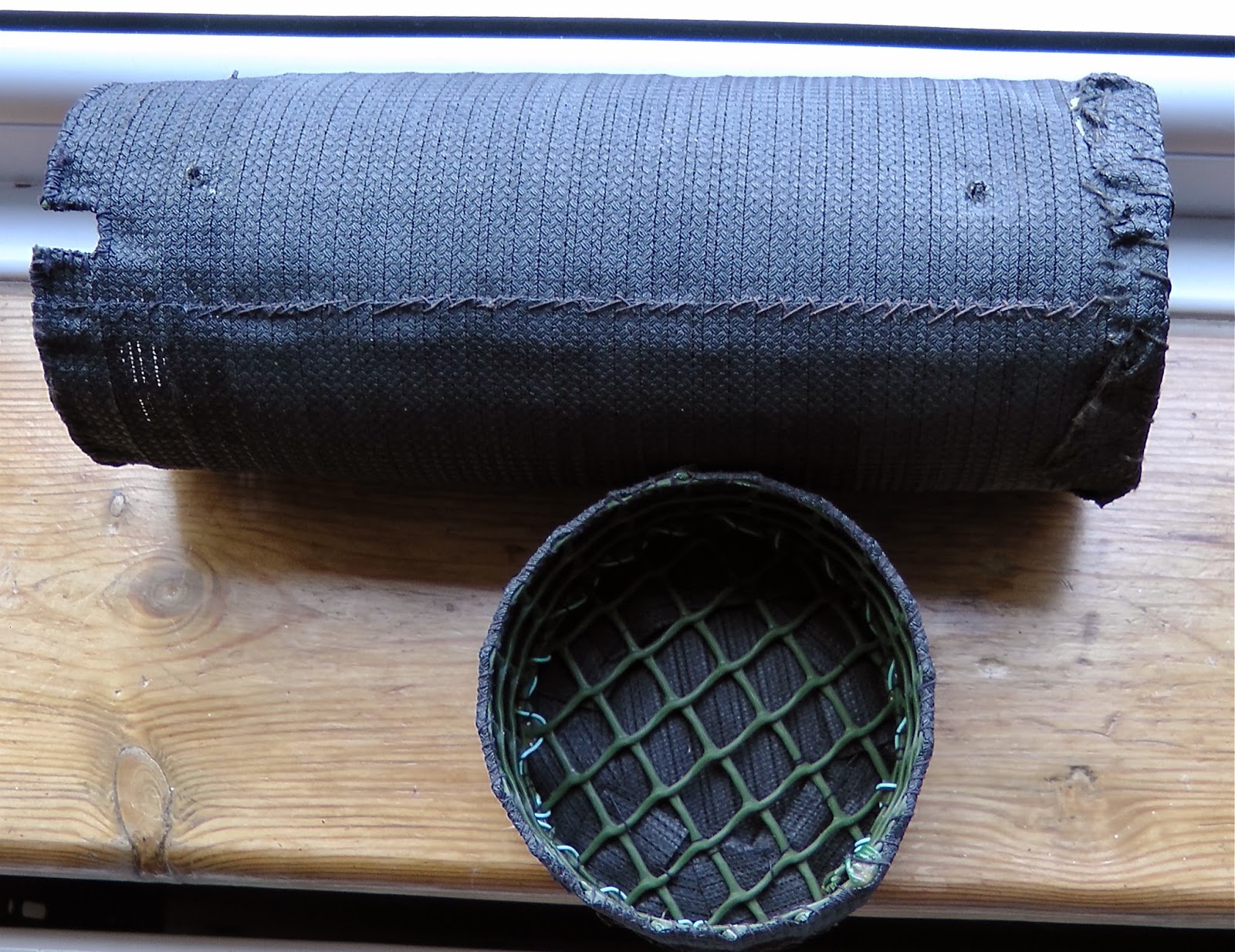
:: Home-made windshield ::
Friday 31st Oct. 
I enjoy recording sounds as an artist (no surprises there). By undertaking this work as purely a creative luxury and keeping my, 'day job', I allow myself the choice of when and where I record - to satisfy my own ego and intentions. The downfalls in working in such a manner includes the fact that if you have no one to please but yourself you may feel there is no need to set work practice to any uniform standard. As you will be the only individual working with the material - only you need to know facts, figures, dates, tech specs and you've got all that in your head anyway so no need to formally record it right...? 


Well I know this is not the case - I'm merely playing devils advocate to illustrate just how poor my own work methods can be in regards to recording crucial information and maintaining professional work standards. All of those bad habits are in the past

As      Of      Now

Chris: What do you record at? 
Me: 24/48
Chris: You don't record at 96?
Me: No - you can't hear the difference anyway
Chris: Maybe but why wouldn't you? You have enough disc space and when you consider just how fast technology is developing - the sound standard is only increasing. In future we may very well have 96k as our broadcast standard.
Me: .....
Chris: Do you indent at all?
Me: Oh.. ahh... I try to but I generally forget
Chris: You should always indent at the start of each recording. Say your name, the place, your equipment, the date and any other information you would like to add. Do you know 'Wave Agent'?
Me: ....... head shake
Chris: You should have a look at it. It embeds the required metadata into your files and it's free. You can put all your indent information in there and your sounds are ready to be archived. No information is lost. Have you timecoded your Sound Devices?
Me: Yep
Chris: Let's have a look. Furrowed brow, changing of settings
Me: Silently realise that it's still set to time-in-Australia not, time-in-UK. Cringe.
Chris: You must timecode for every place you visit.
Me: nodnodnod

- and so we continue like this for the rest of the morning. It was a bit of a wakeup call in regards to my lazy habits. When I was working as an AV tech I (like to think I) was thorough with the systems I implemented and installed for others, logic has it that I should at least do the same for myself. 

Other tips and tricks Chris enlightened me to include the making of his own windshields (see image above). I have seen this done before but not with speaker fabric (Tygan), for the exterior. This allows the sounds to pass through to the microphone with less frequency filtering. With a simple thread-through and loop of a rubber band you have basic suspension for your microphone and a lightweight shield that won't break the bank or leave you teary eyed if it gets damaged in rough terrain which, as a top paid professional - you mightn't want to use it on set but as a penny-pinching artist.... it's ideal.

This project has been assisted by the Australian Government through the Australia Council for the Arts, its arts funding and advisory body.

Monday, November 4, 2013

Day 3. Sounds from the past cont'd - Brinkburn Priory and Holystone

:: Stunned Gold Crest at Brinkburn Priory ::
Thursday morning (30th) I was bitten by the recording bug - namely - the one that reminds you of just how fleeting your time is - in the area of the world you wish to record. I approach Chris in the morning and request we break our plans to spend the day in-studio - to hit the road and continue gathering sounds (along with lessons in history). Chris is out the door before I am.

"Great! Weather's good, let's go!"

I grab my pack and run to catch-up. No time to check I have everything - it's dark by 5 and daylight hours are burning. 

The first stop is at Brinkburn Priory. Luck is with us as we happen to be visiting on the last day before they close for Winter. Again - the weather is windy and a tad gloomy - perfect in that it keeps crowds of visitors away and creates a feeling of privacy and even intimacy between yourself and the environment. First recording is the wind amongst the Birch trees  - the most detailed yet. They quietly crack and whisper amongst themselves. En masse, they're louder than most to the point that I don't hear Chris when he calls for me to, 'come see!' The Priory's warden is standing at the bottom of the drive, holding a tiny bird in her hand. She's looking at it and it's looking straight back at her fearlessly - eye to eye. The bird was a, Gold Crest', the smallest bird in the UK and this little guy had flown into her reception window. She'd found him/her lying on the ground stunned - but alive. No wings were broken and after a few minutes - whereby he/she graced us with an impromptu photo shoot - he/she takes off into the trees. 

Chris points out the acoustics of the church - beautifully alive they enhance the qualities of sounds. I think of Noirlac - and ponder the question Chris poses, 'At such a time, when technology was so basic, how did they manage to design such buildings - that use highly sophisticated architecture to enhance the sounds through acoustics?' 

Good question..... No idea...... Wish I knew......

:: Trees at 'Lady's Well' ::
From Brinkburn we head North West - to Holystone and its, 'Lady's Well.' The journey from one to the other is filled with historical tales about the area - which like Lindefarne - has a lengthy and detailed past. From what I have read and what I have heard - there is a strong belief that the well was originally a pagan site and adopted by the Christian religion at a certain point in its history. On visiting the well there is an undeniable sense of 'communing with nature' that I don't associate with Christianity. The surrounding fir trees stand as pillars in a cathedral and silently command your reverence. While there are stone idols present, they were added in later centuries and consist of only two. The well as it originated - without these figures - would hold an as-sacred impression - one (even more) intrinsically connected to the nature as found there. 

I place a hydrophone pair into the well and an MS pair above ground at the head of the space, between two of the tree columns. Simultaneously they capture the world above and the world below the well's surface. Darkness falls quickly while we are there as does the volume of my voice. As I exit through the gate I am near whispering and find it hard to pull myself away. Who knows what occurs in such a space under the faceless guise of night.


This project has been assisted by the Australian Government through the Australia Council for the Arts, its arts funding and advisory body.

Saturday, November 2, 2013

Day 2. The wind and the tide of Lindisfarne.

:: Walking path for the Monks to come and go from the island - marked by tall poles ::
Lindisfarne is a pretty interesting community (an understatement!). It has a recorded history dating back to the 6th century that includes tales of Viking attacks and nothing less than the birth of Christianity. Personally - what I find so intriguing about its nature is the fact that at certain times of the day, when the tide rises, the island is cut-off from the rest of civilisation. To live on the island is to live by the tide and in a rhythm with the elements you have no control over. People have done-so for well over a thousand years and I am sure they will continue to do-so in the years to come. 

The day of my visit (Wed 30th Oct) was windy and overcast - well suited to imagining the past lives that have sustained such a setting. We walked along the coastline - around the island and found one particularly striking place at which to record. 

:: Recording at Lindisfarne ::

The howl of the wind was the most voice-like I have ever heard. The halyards of the nearby boats banged against their masts - sounds ricocheted off the wall to my left. Chris's ears were noticeably quick at picking the spots where sounds were sweetest. Sometimes he would silently point and I would know where to move to listen. At times the wind would be too strong and we would stand to block its full gale, allowing the microphones a chance to absorb the sounds before wind distortion. 

In the late afternoon we headed to a hide that we had scouted earlier in the day. It was close-by, on the coastline and one that Chris had not recorded at before. While it was still light we positioned our microphones and ran the cable back to the hide. By nightfall - as the tide was moving in, so too was the bird wildlife and we began the recording. Over at least an hour, I listened as the sea crept closer and the bird's chatters grew louder. It is not a process you can rush - like the people of Lindisfarne -  we were also living by the tide - at the beck and call of it's own internal clock - a spectator to it as it passed us by. In the distance I could hear the trains passing through each half hour as per their timetable, adding to the pulse of the environment. As the darkness fell so too did the general humm of daily noise. The nocturnal cycle of sounds rose together as an unseen orchestra, hiding in the dark beyond the hide. We sat in a small circle of dim light - only able to listen and imagine what this world entails.


This project has been assisted by the Australian Government through the Australia Council for the Arts, its arts funding and advisory body.

Thursday, October 31, 2013

Day 1. Open your ears, begin again: Recording under the expertise of Chris Watson


After over a year of planning I have finally begun the recording intensive in North East England under instruction from field recordist Chris Watson. My day of travel from London to the coastline was quite an ordeal. Nature decided to make it interesting by throwing a savage storm across my path. Sitting on a unmoving train for over 8 hours with a handful of strangers - while mild panic ensued and the discontent amassed - provided me with a somewhat surreal experience existing somewhere between 'Breakfast Club' and 'World War Z'. At midday, I did a run for supplies, leaving the quiet safety of our cabin to head into the growing mass of desperate bodies trying to leave the city.

I slipped through their numbers to quickly grab what I needed and headed back to the 'Safe zone'. On return I continued conversation with other strangers. Under the pressure of time they unfolded and told me of their relationships with family, friends, partners - more than once I heard the phrase, 'But I can't really talk about it with them.' I'd ask them why they could talk about it with me and generally, they would shrug. I became a confessional for the troubled individuals whose worrying thoughts had risen to the surface in this time of relentless waiting.
Very surreal...

Tuesday morning (29th) the work begins. I arrive at the Watson residence to find that the unconditional infatuation from their border collie (Jessie) has not waned overnight. While I know I'm not the only one (her attention is lavished on any lucky soul that walks through the front door), it does make me feel somewhat special and warrants interrupting my morning cup of tea discussion with Chris for a quick return of affection. We spend the morning pondering over maps of the areas Chris would like to visit for recordings. Each point on the map brings with it a tale of history - of its past and present inhabitants - of clans and cultures - of beasts and birds all who are connected to this physical origin. By the time the car is packed and we begin our way I am aware that tutoring has well begun.

Today we visit one of Chris's 'favourite places to record'. Heading North West we arrive at a small resting place within Kielder Forest. Visually, it is notably modest but the collections of sounds to be sourced here are diverse and like candy for the ear. An active stream borders the edge of the area, which is filled with both native and introduced trees, (pine and broad leaves, respectively). The wind has many different voices - each tuned by the leaves and trunks it wraps itself around. The coniferous trees - with their thin needled leaves create a constant steady hiss - not unlike white noise. The native Oak and Birch trees crackle in the force of the wind, their broader leaves clapping together like hands to near breaking point. 

I drop the two different hydrophones I have with me into the stream at various points. First I try deeper waters - where the current is strong moving but not so rough. The lower frequencies are more present and the general richness of the audio is a pleasure in itself. In comparison - the shallow stream appears to also shallow the frequencies of the sounds. Their lows disappear and the mid/highs become rougher and less enjoyable. Chris talks to me as I am monitoring and I jump at the direct sound of his voice. He reminds me that sounds travels faster in water than air. What I am hearing is his voice through the stream and it's immediacy is so noticeable that I feel I am hearing his voice microsecond's before his mouth forms the words.

:: Hydrophone recording. Kielder Forest ::
We pack up and leave just before dark. We must head to a nearby clearing and position our microphones for the night - running 100m cable back to the vehicle in wait for the nocturnal nightlife whose sounds we hope to capture. Time is of the essence. The setup (once positioned) must be left for at least a couple of hours before we begin recording, so as to allow the environment to settle again after our disruption. So little time, so much life and obsession to record it....


This project has been assisted by the Australian Government through the Australia Council for the Arts, its arts funding and advisory body.